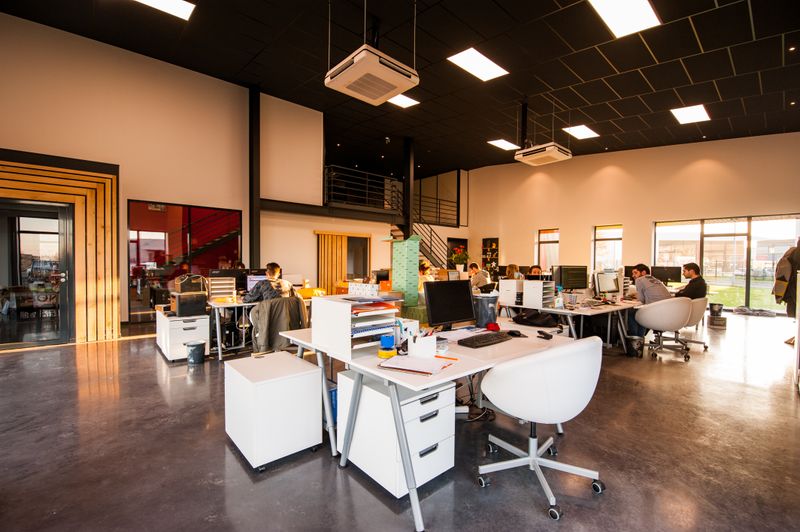
Bengaluru is India's fastest-growing office market — over 18 million sqft of Grade A office space is being built or fitted out across the city in 2025–26. The combination of a large contractor base, a maturing supply chain for office furniture, and slightly lower labour costs than Mumbai makes Bengaluru 10–20% cheaper for fitouts at equivalent quality levels. This guide is based on data from 150+ fitout projects across Whitefield, Outer Ring Road, Electronic City, Hebbal, and the Central Business District.
Key Takeaway
A fully loaded standard-finish office fitout in Bengaluru costs ₹1,700–₹2,600 per sqft in 2026. Budget tier starts at ₹1,100/sqft. Premium fitouts run ₹2,600–₹4,200/sqft. The city's deep talent pool of PMC firms and vendors means more competitive pricing if you get at least three quotes.
Office Fitout Cost Tiers — Bengaluru 2026
| Tier | Per-Sqft Range | Typical Client | What You Get |
|---|---|---|---|
| Budget | ₹1,100 – ₹1,700 | Startups, co-working operators, BPOs | Painted walls, grid ceiling, OEM workstations, ducted splits |
| Standard | ₹1,700 – ₹2,600 | IT services firms, product companies, GCCs | VRF HVAC, glass partitions, mid-range ergonomic chairs, access control |
| Premium | ₹2,600 – ₹4,200 | MNCs, large tech campuses | Feature ceilings, premium flooring, full AV, biophilic elements |
| Luxury | ₹4,200 – ₹7,500+ | Flagship HQs, trophy offices | Bespoke design, imported furniture, smart building systems |
These figures include all civil works, MEP, furniture, IT rough-in, project management, and GST. Structural modifications, generator installation, and DG set room construction are typically billed separately.
Category-Wise Cost Breakdown for a Standard Bengaluru Office
The following breakdown is for a 6,000 sqft standard-tier office in Whitefield — a common configuration for a GCC team of 80–100 people.
| Work Category | Cost Per Sqft (₹) | Bengaluru-Specific Notes |
|---|---|---|
| False ceiling | ₹70 – ₹140 | Grid ceiling dominant; Armstrong and Saint-Gobain widely available |
| Flooring | ₹90 – ₹210 | Carpet tiles popular in Bengaluru tech offices; vinyl plank gaining share |
| Painting & wall treatment | ₹40 – ₹85 | Asian Paints most competitive; feature wall wallpapers ₹60–₹180/sqft |
| HVAC | ₹175 – ₹320 | VRF from Daikin, Mitsubishi, LG; Bengaluru climate is moderate so tonnage requirements are lower |
| Electrical & lighting | ₹100 – ₹185 | LED panels well-priced due to large supplier base |
| Plumbing & sanitary | ₹35 – ₹70 | Usually minor modifications in leased spaces |
| Workstations & seating | ₹220 – ₹480 | Large local manufacturer base (Featherlite, Haworth India) keeps prices competitive |
| Cabins & glass partitions | ₹130 – ₹270 | Single-glaze aluminium frame is the Bengaluru standard |
| IT & AV | ₹55 – ₹140 | Structured cabling, server room, display screens, VC systems |
| Fire safety | ₹28 – ₹55 | BBMP fire NOC required; sprinklers mandatory above 3 floors |
| Project management | ₹55 – ₹110 | 4–7% of project value |
| Contingency | ₹35 – ₹75 | 5% is standard; add more for complex layouts |
Bengaluru vs Mumbai vs Hyderabad: How Do Costs Compare?
| City | Budget (₹/sqft) | Standard (₹/sqft) | Premium (₹/sqft) |
|---|---|---|---|
| Mumbai | 1,200 – 1,800 | 1,800 – 2,800 | 2,800 – 4,500 |
| Bengaluru | 1,100 – 1,700 | 1,700 – 2,600 | 2,600 – 4,200 |
| Hyderabad | 1,000 – 1,600 | 1,600 – 2,400 | 2,400 – 3,800 |
| Pune | 1,000 – 1,600 | 1,600 – 2,500 | 2,500 – 4,000 |
| Delhi NCR | 1,100 – 1,700 | 1,700 – 2,700 | 2,700 – 4,300 |
| Chennai | 950 – 1,500 | 1,500 – 2,300 | 2,300 – 3,700 |
Bengaluru sits just below Mumbai and broadly in line with Delhi NCR. Hyderabad is the most competitive market currently, partly because of aggressive contractor competition for large GCC mandates. The 10–15% Bengaluru premium over Hyderabad is driven by higher land costs (which push up logistics expenses), slightly higher demand for quality finishes among tech companies, and higher labour rates in skill-scarce trades like drywalling and AV integration.
The Outer Ring Road Premium
Office buildings along the Outer Ring Road (ORR) — Marathahalli, Kadubeesanahalli, Sarjapur Road — tend to attract slightly higher fitout costs for a specific reason: building management regulations. Most Grade A buildings on the ORR are managed by international property managers (JLL, CBRE, Cushman & Wakefield) who enforce stringent guidelines on fitout contractors. MEP contractors must be registered with the building, and all designs must be approved by the building's MEP consultant before work begins. This process adds 2–4 weeks to the pre-construction phase and 5–10% to MEP costs due to documentation and compliance requirements.
Electronic City and Bommasandra have a different dynamic — older buildings with softer management rules and more contractor flexibility, which translates to lower costs but also lower quality benchmarks. Projects in these locations should insist on stricter self-imposed quality standards.
What GCCs (Global Capability Centres) Do Differently in Bengaluru
Bengaluru hosts more GCCs than any other Indian city — over 1,600 by 2025. Their fitout approach has distinct patterns worth understanding whether you are a GCC setting up your first India office or a service provider trying to win their business.
- Global standards applied locally: Most GCCs use their parent company's global workplace standards (LEED certification, WELL certification, specific furniture brands). This often means 15–25% higher costs than equivalent non-GCC offices.
- Long procurement timelines: International approval processes for furniture and large capital items can add 6–12 weeks. Project schedules must account for this.
- Preferred vendor lists: Many GCCs restrict contractors to approved vendor lists. This limits competitive pricing but reduces risk. If you are a new GCC in India, request your parent company's India vendor database before shortlisting contractors.
- Mandatory LEED or WELL certification: For large campuses, certification adds ₹150–₹350/sqft to the base cost but provides long-term operational savings and talent attraction benefits.
Regulatory Requirements for Bengaluru Office Fitouts
BBMP (Bruhat Bengaluru Mahanagara Palike) is the primary regulatory body for commercial offices in core Bengaluru. BBMP requires: a building plan sanction for any structural changes, an occupancy certificate before moving in, and a fire NOC from the Karnataka State Fire and Emergency Services Department. For buildings in Electronic City or the IT corridor (which fall under BIAAPA or BDA jurisdiction), approvals follow slightly different procedures.
Karnataka has increasingly enforced the Real Estate (Regulation and Development) Act provisions for commercial office leases, which means your fitout contractor must have proper registrations and their subcontractors must be licensed. Verify ESIC and PF registration of your primary contractor before issuing a work order.
Bengaluru-Specific Cost Savers
- Buy furniture direct from Featherlite or Wipro Furniture Solutions — both are headquartered in Bengaluru and offer significantly lower prices to direct buyers than to contractors who add a 20–35% margin.
- Source ceiling tiles and flooring from vendors in Peenya Industrial Area — prices can be 15–25% lower than buying through a contractor who sources from Bengaluru distributors.
- HVAC commissioning: The Bengaluru climate (mild compared to Mumbai or Delhi) means smaller tonnage and lower running costs. Do not let contractors over-specify capacity to inflate the project cost.
- Structured cabling: Bengaluru has numerous certified Systimax, R&M, and CommScope installers. Get competitive quotes specifically for this scope — it is a line item where contractor margins tend to be high.
- Carpet tiles: Bengaluru's dry climate makes carpet tiles a practical choice. They are cheaper to install than vinyl plank and can be replaced individually. Interface, Mohawk, and Shaw are all available locally.
Sample Budget: 6,000 Sqft Standard Office in Whitefield
| Line Item | Amount (₹) |
|---|---|
| Civil works (ceiling, flooring, painting) | 16,80,000 |
| HVAC system (VRF, 6 zones) | 12,60,000 |
| Electrical, lighting & cabling | 9,00,000 |
| Workstations (80 seats) | 14,40,000 |
| Ergonomic chairs (80 units) | 6,40,000 |
| Glass partitions (6 cabins + 2 conference rooms) | 7,20,000 |
| Reception, pantry & breakout furniture | 4,50,000 |
| IT infrastructure rough-in | 3,60,000 |
| Conference room AV (2 rooms) | 3,00,000 |
| Fire safety systems | 2,40,000 |
| Signage & branding | 1,50,000 |
| PMC fee (6%) | 6,00,000 |
| Contingency (5%) | 5,00,000 |
| GST @ 18% on applicable items | 8,40,000 |
| Total | ₹1,00,80,000 (₹1,680/sqft) |
This estimate lands near the top of the Budget tier and the bottom of the Standard tier — which is realistic for a well-negotiated project in Whitefield where contractors compete actively for volume work.
Bengaluru tip: Always check if your building has a preferred list of MEP contractors. If they are mandatory, get quotes from at least two firms on that list. Building-mandated contractors sometimes know they have limited competition and price accordingly.
Analyse Your BOQ for Free
Upload your contractor BOQ and get an instant line-by-line analysis highlighting overpriced items, missing scope, and benchmark comparisons.
Open BOQ Analyser